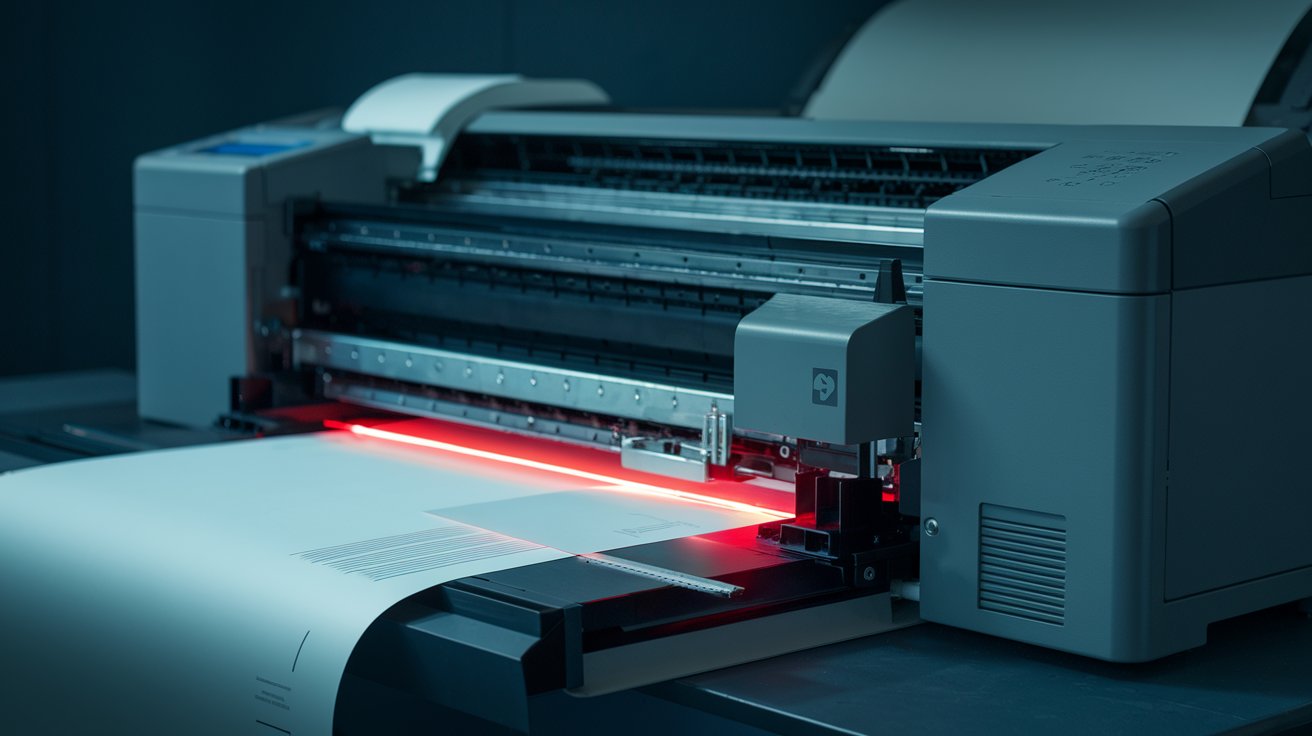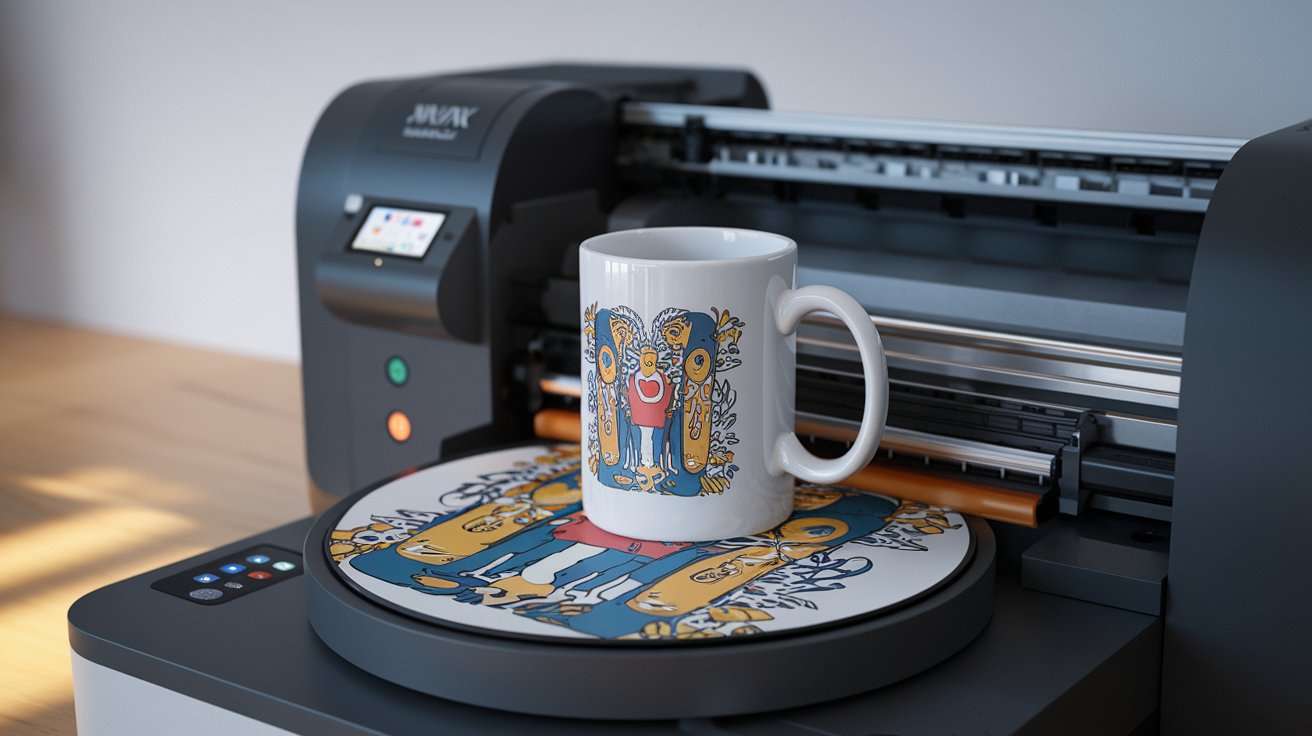
A sublimation printer is a specialized printing device that uses heat to transfer dye onto materials like polyester fabric, ceramics, and coated surfaces. Unlike traditional inkjet printers, sublimation printing converts solid ink into gas without passing through a liquid state, creating permanent, vibrant, and fade-resistant designs. In 2026, sublimation technology has become the go-to solution for custom merchandise businesses, personalized gift creators, and apparel designers across the United States, with the market growing at 8.7% annually.
How Sublimation Printing Technology Works
The sublimation printing process relies on a scientific principle where heat and pressure transform solid dye particles directly into gas, bypassing the liquid phase entirely. This dye-sublimation technology occurs at temperatures between 350-400°F (177-204°C), causing the ink to penetrate the polymer structure of the material rather than sitting on top like conventional printing methods. The process creates molecular bonds that result in permanent, scratch-resistant, and washable designs that will not crack, peel, or fade over time.
Modern sublimation printers in 2026 use specially formulated sublimation inks containing disperse dyes suspended in liquid carriers. When printed onto sublimation transfer paper, these inks remain dormant until activated by heat. During the transfer process using a heat press, the solid dye particles convert to gas and embed themselves into the polyester fibers or polymer coating of the substrate. This creates images with exceptional color depth, smooth gradients, and photographic quality that conventional printing cannot match. The entire sublimation workflow requires three key components: a sublimation printer with appropriate inks, sublimation transfer paper, and a heat press capable of maintaining consistent temperature and pressure.
Sublimation Printer vs Regular Inkjet Printer
The fundamental difference between sublimation and regular printers lies in the ink chemistry and transfer method. Standard inkjet printers use water-based or pigment-based inks that sit on the surface of paper, while sublimation printers use specialized dye-based inks designed to convert to gas under heat. Regular inkjet ink would simply burn or smear when exposed to the high temperatures required for sublimation transfer, making it impossible to use conventional printers for this application without significant modification.
Many crafters ask whether they can use their regular printer for sublimation, and the answer requires important clarification. Standard consumer printers from HP, Canon, or Brother cannot perform sublimation without conversion because their printheads and ink delivery systems are optimized for water-based inks. However, certain Epson EcoTank printers can be converted to sublimation by replacing the standard ink with sublimation ink, as Epson’s piezoelectric printhead technology is compatible with sublimation ink chemistry. Popular conversion models in 2026 include the Epson EcoTank ET-2760, ET-2800, and ET-4800 series, which cost between $250-$400 before conversion. Once converted, these printers lose their warranty and cannot return to regular printing without thorough cleaning, as mixing ink types damages printheads.
Compatible Materials and Substrates
Understanding what materials can be printed with sublimation is crucial for successful projects. The sublimation process requires materials containing at least 50% polyester content or items with a specialized polymer coating. Natural fibers like 100% cotton, uncoated wood, or untreated metal cannot accept sublimation dye because they lack the polymer structure necessary for the gas-to-solid bonding process. This limitation means sublimation works best on synthetic materials where the dye can integrate at the molecular level during the heat transfer phase.
Fabric and Apparel Substrates
For textile applications, polyester fabrics deliver the most vibrant and durable results with sublimation printing. Pure polyester shirts, athletic wear, and performance fabrics accept sublimation dye perfectly, creating designs that breathe with the fabric and maintain softness without adding texture. Poly-blend fabrics containing 50-80% polyester also work but produce lighter, more vintage-looking colors proportional to the polyester percentage. The remaining natural fiber content remains undyed, creating a distressed effect. In 2026, specialized sublimation apparel blanks from suppliers like S&S Activewear and Vapor Apparel range from $4-$18 per garment, with tri-blend options becoming increasingly popular for their soft hand feel despite slightly muted color output compared to pure polyester.
Hard Goods and Coated Products
Beyond fabric, polymer-coated hard substrates represent a massive market for sublimation printing. Ceramic mugs with polymer coating, aluminum photo panels, acrylic awards, phone cases, and mouse pads all feature specialized coatings that accept sublimation dye. These coated blanks allow sublimation transfer onto otherwise incompatible materials like ceramic, metal, glass, and plastic. The polymer coating melts slightly during heat transfer, allowing dye penetration before resolidifying to lock the image permanently. Premium sublimation blanks in 2026 include detailed coating specifications, with higher-grade coatings producing more vibrant colors and better durability. Bulk suppliers like Conde Systems and ProWorld offer thousands of sublimatable products ranging from $0.50 keychains to $200+ chromaluxe panels for professional photography.
Types of Sublimation Printers Available
The sublimation printer market offers options ranging from converted consumer models to commercial production equipment. Entry-level crafters typically start with converted Epson EcoTank printers that cost $250-$400, then spend an additional $40-$80 on sublimation ink conversion kits. These desktop units handle standard letter and tabloid-sized prints, making them ideal for small items like mugs, coasters, and baby onesies. For higher volume production, dedicated sublimation-ready printers like the Sawgrass SG500 and SG1000 come pre-configured with sublimation inks and ICC color profiles, eliminating conversion hassles and providing manufacturer support.
Mid-range sublimation printers dominate the small business segment, with models like the Epson SureColor F170 ($500-$700) and Sawgrass SG1000 ($800-$1,200) offering wider format printing up to 13×19 inches with improved color management and higher print speeds. These printers produce 15-20 full-size transfers per hour, suitable for businesses printing 50-200 items weekly. At the commercial level, wide-format sublimation printers like the Epson SureColor F570 (24-inch width, $2,000-$2,500) and Mutoh ValueJet VJ-628D (24-inch width, $7,000-$9,000) enable all-over apparel printing and large-format signage. In 2026, the fastest-growing category includes direct-to-fabric sublimation printers like the Epson SureColor F10070 ($60,000+), which print directly onto polyester fabric rolls without transfer paper, revolutionizing textile manufacturing efficiency for production runs exceeding 100 garments daily.
Sublimation Printer vs Cricut Machines
A common misconception asks is a Cricut a sublimation printer, which reveals confusion about these complementary but different technologies. Cricut machines are electronic cutting devices that precisely cut materials like vinyl, cardstock, and heat transfer vinyl based on digital designs. They cannot print images or transfer dye—instead, they cut pre-printed materials into shapes for application. A sublimation printer creates the image by printing special dye onto transfer paper, while a Cricut could potentially cut that printed transfer paper into specific shapes before the heat press stage, but this is not the primary function or strength of either device.
The Cricut Mug Press and Cricut Autopress launched in 2022-2023 do work excellently with sublimation transfers, but these are heat press devices, not printers. To create sublimation products using Cricut equipment, crafters must first print designs using a separate sublimation printer like a converted Epson or Sawgrass unit, then optionally use a Cricut cutting machine to trim the transfer to size, and finally use a Cricut heat press or standard heat press to complete the transfer. In 2026, the typical Cricut and sublimation workflow involves three distinct devices: the sublimation printer ($250-$1,200), the Cricut cutting machine if needed ($200-$400), and a heat press ($50-$400 depending on size and automation). This equipment combination allows maximum versatility for custom product creation but represents a $500-$2,000 initial investment depending on chosen equipment quality.
Complete Sublimation Printing Setup Requirements
Starting a sublimation printing operation requires more than just a printer, and understanding the complete ecosystem prevents costly mistakes. The essential components include a sublimation printer with compatible inks, sublimation transfer paper, a heat press with accurate temperature control, and sublimatable blank products. Each element must work together properly—using the wrong paper type or incorrect heat press settings will result in faded, incomplete, or failed transfers regardless of printer quality.
Sublimation Ink and Paper Systems
The sublimation ink quality directly impacts color vibrancy, longevity, and transfer success rates. Premium sublimation inks like Sawgrass SubliJet-HD and Hiipoo sublimation ink cartridges contain higher dye concentrations and more precise color formulations than budget alternatives, resulting in more accurate color reproduction and better wash fastness. In 2026, a complete set of sublimation ink bottles for an Epson EcoTank conversion costs $40-$80 for 100ml bottles (4 colors) or $60-$120 for 400ml bottles, with each milliliter printing approximately 2-3 letter-sized transfers at standard density. Choosing the right sublimation transfer paper proves equally important, as paper weight, coating quality, and release properties affect transfer efficiency. Heavier 120gsm papers provide better ink retention and less curling than lighter 80gsm options, while premium papers like A-SUB and TexPrint show higher transfer rates with less ghosting. Paper costs range from $0.15-$0.40 per letter-sized sheet depending on quality grade and purchase volume.
Heat Press Equipment Selection
The heat press serves as the critical transfer device in sublimation printing, applying the precise temperature and pressure required to convert solid dye into gas and bond it with the substrate. Entry-level clamshell heat presses start at $150-$200 for 12×15 inch platens, providing manual pressure adjustment and basic temperature control suitable for hobbyists pressing 5-10 items weekly. Mid-range digital heat presses ($300-$600) offer auto-open features, digital temperature and timer controls, and more consistent pressure across the platen surface, improving transfer quality and reducing operator fatigue for small businesses. Specialized sublimation heat presses address specific product categories: mug presses ($50-$300) with cylindrical heating elements for 11oz and 15oz mugs, tumbler presses ($100-$400) for tapered drinkware, cap presses ($200-$500) for hat decoration, and plate presses ($150-$350) for ceramic dishware. In 2026, automated pneumatic heat presses ($800-$2,000) with air-powered pressure systems deliver consistent results across thousands of transfers, essential for commercial production environments where quality consistency determines customer satisfaction and reduces waste from failed transfers.
Business Applications and Market Opportunities
The sublimation printing industry generated over $8.2 billion in revenue across North America in 2025, with projections reaching $11.4 billion by 2028 according to market research from Smithers and FESPA. This growth is driven by increasing consumer demand for personalized products, the rise of print-on-demand business models, and improvements in sublimation technology that reduce costs while improving quality. In the United States, sublimation businesses range from home-based side hustles earning $500-$2,000 monthly to full-scale production facilities generating $50,000-$200,000 monthly revenue through custom apparel, promotional products, and personalized gifts.
Popular sublimation printing business models include direct-to-consumer personalization services, wholesale blank decoration for other businesses, event-based on-site printing at festivals and markets, and print-on-demand integration with e-commerce platforms like Etsy, Shopify, and Amazon Merch. Successful sublimation entrepreneurs identify profitable niches such as sports team apparel, memorial products, pet owner merchandise, or specific hobby communities where customization commands premium pricing. Average profit margins on sublimation products range from 40-70% after material and labor costs, with items like sublimated tumblers costing $4-$6 in materials and selling for $18-$30, while custom athletic jerseys cost $8-$12 and sell for $35-$55. The key profitability factor involves production efficiency—experienced operators can press 6-8 mugs per hour or 3-4 shirts per hour including design, printing, and pressing time, making volume throughput essential for reaching meaningful income levels.
Custom Apparel and Athletic Wear
The custom apparel segment represents the largest market for sublimation printing, particularly in athletic wear, activewear, and performance sportswear. Sublimation’s ability to create all-over prints without adding weight or texture makes it ideal for moisture-wicking jerseys, compression gear, and leggings where traditional screen printing would compromise fabric performance. In 2026, youth sports teams, esports organizations, and fitness studios drive consistent demand for sublimated team uniforms, with typical orders ranging from 12-30 pieces per team at $35-$55 per jersey. The sublimation process allows unlimited colors and complex designs without setup fees, making small-batch custom orders economically viable compared to screen printing which requires minimum quantities of 50-100 pieces to achieve competitive pricing. Advanced sublimators serve this market with all-over apparel printing using wide-format printers and large-format heat presses, creating seamless designs that wrap around entire garments for fashion-forward streetwear brands and independent clothing lines.
Personalized Gifts and Home Decor
The personalized gift market continues explosive growth with sublimation enabling cost-effective customization of thousands of product types. Popular items include photo mugs ($18-$30 retail), custom ornaments ($12-$22), personalized blankets ($45-$75), metal photo prints ($25-$150), and custom pillows ($28-$45). The ability to print photographic-quality images on sublimation blanks allows small businesses to compete with mass manufacturers by offering superior customization speed—most sublimation shops can produce a custom mug in 15-20 minutes from order receipt to finished product. Seasonal opportunities amplify revenue, with Christmas ornaments, Mother’s Day gifts, graduation keepsakes, and wedding favors driving 40-60% of annual sales for many sublimation businesses. Smart operators develop sublimation product templates and streamlined workflows that enable 30-50 unique items daily with a single-person operation, leveraging design tools like Canva, Adobe Illustrator, and specialized sublimation software like CreativeStudio and CorelDRAW.
Advantages of Sublimation Printing Technology
The benefits of sublimation printing explain its dominance in specific market segments despite competition from screen printing, DTG, and vinyl heat transfer. The permanent nature of sublimated designs—where dye becomes part of the substrate rather than sitting on top—creates exceptional durability that withstands hundreds of wash cycles without fading, cracking, or peeling. This longevity advantage proves especially valuable for athletic apparel and frequently washed items where other decoration methods deteriorate rapidly. Commercial testing shows properly sublimated polyester garments retain 90% or more of original color vibrancy after 100 industrial wash cycles, while vinyl transfers often begin peeling after 15-25 washes and screen prints can fade by 30-40% over the same period.
The design flexibility of sublimation enables unlimited colors, photographic images, and gradient effects without additional costs per color like screen printing requires. This makes small-batch custom orders economically viable—a single custom mousepad costs the same to produce as 100 identical ones, unlike screen printing where setup fees of $50-$100 per color make small quantities prohibitively expensive. The soft hand feel represents another crucial advantage, as sublimated designs add no thickness or texture to fabric, maintaining breathability and comfort essential for performance wear. Additionally, sublimation prints maintain full color saturation on white and light-colored materials, and the process generates minimal waste compared to screen printing which requires screens, emulsions, and cleanup chemicals. In 2026, environmental considerations increasingly favor sublimation’s cleaner process, with water-based sublimation inks and no wastewater generation appealing to eco-conscious brands and consumers demanding sustainable production methods.
Limitations and Disadvantages to Consider
Understanding what are the disadvantages of sublimation printing prevents unrealistic expectations and helps identify when alternative technologies better suit specific applications. The most significant limitation involves material restrictions—sublimation only works on polyester fabrics and polymer-coated surfaces, eliminating 100% cotton garments, dark-colored materials, and uncoated natural substrates from consideration. This polyester requirement limits market opportunities in segments where cotton remains preferred, such as traditional screen-printed t-shirts, promotional tote bags, and natural fiber fashion apparel. The restriction to white or light-colored substrates further constrains design options since sublimation dye is translucent and disappears against dark backgrounds, preventing the popular dark-garment printing that DTG and screen printing handle easily.
Cost considerations present another challenge, as sublimation startup costs of $500-$2,000 for printer, heat press, and initial supplies exceed simple vinyl cutting operations requiring only a $200-$300 machine and heat source. The ongoing expense of sublimation ink ($40-$80 per refill set lasting 200-300 prints) and specialized transfer paper ($0.15-$0.40 per sheet) creates per-item costs of $1-$3 for materials alone, compared to vinyl heat transfer costs of $0.30-$1.00 per simple design. Technical challenges include color management complexity, where monitor colors rarely match printed output without calibration using ICC profiles, color charts, and test prints—a learning curve that frustrates beginners expecting plug-and-play simplicity. Equipment maintenance requirements add operational burden, with printheads requiring weekly cleaning cycles, annual replacement of dampers and wiper blades, and careful ink management to prevent clogging during idle periods. In 2026, failed sublimation transfers due to incorrect temperature, insufficient pressure, or improper dwell time still waste materials for inexperienced operators, with typical success rates improving from 70-80% for beginners to 95%+ for experienced sublimators after 50-100 practice transfers.
Cost Analysis and Investment Requirements
Determining how much is a sublimation printer requires examining total system costs rather than printer price alone. Entry-level operations using a converted Epson EcoTank ET-2760 ($250-$300), sublimation ink conversion kit ($40-$60), basic clamshell heat press ($150-$200), starter paper pack ($20-$30), and sample blank products ($50-$100) require $510-$690 total investment before producing the first saleable item. This budget sublimation setup handles mugs, mousepads, coasters, small signs, and baby apparel up to 12×15 inches, suitable for testing market viability before larger commitments. Upgrading to a dedicated sublimation printer like the Sawgrass SG500 ($500-$700) or Epson F170 ($500-$700) eliminates conversion hassles and adds manufacturer support but increases initial outlay to $800-$1,100 total.
Mid-level sublimation business setups optimized for consistent part-time income typically invest $1,500-$3,000 in equipment including a larger-format printer like the Sawgrass SG1000 ($800-$1,200), premium digital heat press with auto-open ($400-$600), specialized accessory presses for mugs and tumblers ($150-$400), quality sublimation inks ($80-$120), bulk transfer paper ($100-$200 for 500-1000 sheets), and diverse blank inventory ($200-$500). This configuration supports production of 20-40 items daily across multiple product categories, enabling $2,000-$6,000 monthly revenue at typical margins. Commercial sublimation production facilities invest $10,000-$50,000+ in wide-format printers ($2,000-$15,000), pneumatic or automatic heat presses ($1,500-$5,000), conveyor dryers ($3,000-$8,000), color calibration systems ($500-$2,000), and extensive blank inventory ($2,000-$10,000), supporting full-time operations producing 100-500 items daily with multiple employees and achieving $15,000-$75,000 monthly revenue depending on market positioning and operational efficiency.
Alternative Decoration Methods Comparison
Evaluating sublimation printing versus alternative decoration technologies helps identify the optimal method for specific applications. Screen printing remains the cost-effective choice for large-volume orders of identical designs, with per-unit costs dropping to $2-$4 for simple designs in quantities exceeding 100 pieces, compared to sublimation’s consistent $3-$6 per-unit cost regardless of quantity. However, screen printing requires significant setup time, equipment investment ($1,000-$10,000 for manual to automatic presses), and minimum quantities to achieve competitive pricing, making it unsuitable for the one-off custom orders that sublimation handles profitably. Heat transfer vinyl provides another alternative, offering dark-garment compatibility and cotton fabric printing that sublimation cannot achieve, with simpler equipment requirements of just a cutting machine ($200-$400) and heat press ($150-$400) producing $0.30-$1.50 material costs per design.
Direct-to-garment (DTG) printing competes directly with sublimation in the custom apparel space, offering photographic-quality prints on cotton fabrics including dark colors, but with higher equipment costs ($5,000-$30,000 for quality DTG printers) and expensive pretreatment requirements adding $0.50-$1.50 per garment. DTG vs sublimation decisions often depend on fabric preference—cotton-focused businesses choose DTG while polyester-focused athletic and performance wear brands select sublimation. In 2026, hybrid operations maintain both technologies, using sublimation for polyester athletic wear, all-over prints, and hard goods while deploying DTG for cotton t-shirts and dark garments. The newest competition comes from DTF (direct-to-film) printing, which combines aspects of both methods by printing designs onto special film with powder adhesive, then heat-pressing onto virtually any fabric color or type. DTF systems cost $3,000-$8,000 and offer greater substrate versatility than sublimation while maintaining good durability, though the hand feel includes slight texture unlike sublimation’s complete integration into fabric. Each technology occupies specific niches, with experienced decorators selecting methods based on substrate material, order volume, required durability, and color requirements rather than viewing them as direct competitors.
Related video about what is a sublimation printer
This video complements the article information with a practical visual demonstration.
Everything you need to know about what is a sublimation printer
Can I use my regular inkjet printer for sublimation printing?
Most regular inkjet printers cannot perform sublimation without conversion, with the important exception of certain Epson EcoTank models. Printers from HP, Canon, and Brother use ink systems and printhead technologies incompatible with sublimation ink chemistry. However, Epson printers with piezoelectric printheads—particularly EcoTank models like the ET-2760, ET-2800, and ET-4800—can be converted by replacing standard ink with sublimation ink. This conversion costs $40-$80 for sublimation ink but voids the printer warranty and prevents returning to regular ink without thorough cleaning. Once converted, these printers produce quality sublimation transfers comparable to dedicated sublimation printers costing $500-$1,200, making conversion an attractive entry point for hobbyists and small businesses testing market viability before larger equipment investments.
What is the difference between a sublimation printer and a regular printer?
The fundamental difference lies in ink chemistry and intended output. Regular printers use water-based or pigment-based inks designed to remain on paper surfaces, producing documents and photos. Sublimation printers use specialized dye-based inks formulated to convert from solid to gas under heat (350-400°F), allowing the dye to penetrate polyester fibers and polymer coatings to create permanent, embedded images. Regular printer ink would burn or smear at sublimation temperatures, making it unusable for heat transfer applications. Additionally, sublimation printers typically output designs onto sublimation transfer paper rather than creating finished products directly, requiring a subsequent heat press stage to complete the transfer onto the final substrate. This two-stage process distinguishes sublimation from regular printing where the printed page represents the finished product.
How much does a sublimation printer cost in 2026?
Sublimation printer costs in 2026 range from $250 for converted consumer models to over $60,000 for commercial production equipment. Entry-level crafters typically spend $250-$400 on Epson EcoTank printers for conversion, or $500-$700 for dedicated units like the Sawgrass SG500 or Epson F170 that come ready for sublimation. Mid-range small business printers cost $800-$2,500, including models like the Sawgrass SG1000 ($800-$1,200) and Epson F570 wide-format 24-inch printer ($2,000-$2,500). Professional commercial sublimation printers range from $5,000-$15,000 for models handling higher volumes and larger formats, while industrial direct-to-fabric systems exceed $60,000. Beyond the printer cost, complete sublimation setups require heat press equipment ($150-$2,000), sublimation inks ($40-$120), transfer paper ($20-$200), and blank inventory ($50-$500), bringing total initial investment to $510-$3,000 for most new operations.
What materials can you sublimate on?
Sublimation works on polyester fabrics and polymer-coated surfaces only, as the dye requires polymer molecules to bond with during the heat transfer process. For fabrics, materials must contain at least 50% polyester, with 100% polyester producing the most vibrant results. Lower polyester percentages create lighter, more vintage-looking colors. Hard goods require specialized polymer coatings to accept sublimation, including ceramic mugs, aluminum photo panels, acrylic awards, phone cases, mouse pads, and coated metal signs. Natural materials like 100% cotton, uncoated wood, leather, or bare metal cannot be sublimated without first applying a polymer coating spray. The restriction to light-colored or white surfaces also applies, as sublimation ink is translucent and invisible against dark backgrounds. In 2026, thousands of sublimation-ready blank products exist across dozens of categories, from apparel to home decor to promotional items, all featuring the polyester content or polymer coating essential for successful dye transfer and permanent image bonding.
Is sublimation printing profitable for small businesses?
Sublimation printing offers strong profit potential for small businesses, with typical gross margins of 40-70% after material costs. A custom sublimated mug costs $4-$6 in materials (blank mug, ink, paper, packaging) and sells for $18-$30, generating $12-$24 profit per item. Custom tumblers cost $6-$10 and sell for $25-$40, while personalized shirts cost $8-$12 and retail for $35-$55. Successful small sublimation businesses in 2026 report monthly revenues of $2,000-$10,000 working part-time, with full-time operations reaching $15,000-$75,000 monthly depending on product mix, market positioning, and production efficiency. Profitability depends heavily on production volume and efficiency—experienced operators produce 6-8 pressed mugs or 3-4 shirts hourly, making throughput essential. The key advantages include low per-unit costs regardless of order size, no minimum quantities, unlimited design colors without upcharges, and strong product durability that reduces returns and builds customer loyalty through quality satisfaction.
What are the main disadvantages of sublimation printing?
Sublimation printing has four primary limitations that affect its applicability. First, it only works on polyester fabrics and polymer-coated surfaces, eliminating 100% cotton garments, dark-colored materials, and natural substrates like untreated wood or uncoated metal. Second, designs only show on white or light-colored backgrounds since sublimation ink is translucent, preventing the popular dark-garment printing that other methods achieve easily. Third, initial equipment investment of $500-$2,000 for printer, heat press, and supplies exceeds simpler decoration methods, with ongoing costs of $40-$80 for ink refills and $0.15-$0.40 per transfer sheet adding to per-unit expenses. Fourth, color management complexity challenges beginners, as monitor colors rarely match printed output without calibration using ICC profiles and test prints—a technical learning curve requiring 50-100 practice transfers before achieving consistent results. Additionally, equipment maintenance including weekly printhead cleaning and careful ink management to prevent clogging adds operational requirements that simpler vinyl cutting or heat transfer methods do not demand.
| Key Aspect | Important Details | Benefit |
|---|---|---|
| Technology Type | Heat-activated dye transfer using specialized sublimation ink that converts solid to gas at 350-400°F | Permanent, fade-resistant designs that become part of the substrate rather than sitting on surface |
| Compatible Materials | Polyester fabrics (50%+ content) and polymer-coated hard goods including ceramics, metals, and acrylics | Exceptional durability with 90%+ color retention after 100+ wash cycles on proper substrates |
| Equipment Investment | Entry-level: $510-$690 | Small business: $1,500-$3,000 | Commercial: $10,000-$50,000+ | Scalable investment levels allowing hobby entry with upgrade path to full production |
| Profit Margins | Typical gross margins of 40-70% with material costs of $3-$12 per item depending on product type | Strong profitability on custom orders with no minimum quantities required for economic viability |
| Design Flexibility | Unlimited colors, photographic images, gradients, and complex designs without per-color charges | Enables one-off custom products at same cost as large production runs, perfect for personalization |
| Primary Limitations | Requires polyester or coated surfaces; only works on white/light colors; higher learning curve than vinyl | Understanding restrictions prevents wasted materials and guides proper product selection for success |
| Best Applications | Athletic apparel, performance wear, custom gifts, promotional products, photo items, personalized home decor | Dominates markets requiring photo-quality, all-over prints, or designs on technical fabrics |
| 2026 Market Size | North American sublimation market exceeds $8.2 billion with 8.7% annual growth projected through 2028 | Growing demand for personalized products creates expanding opportunities for new businesses |