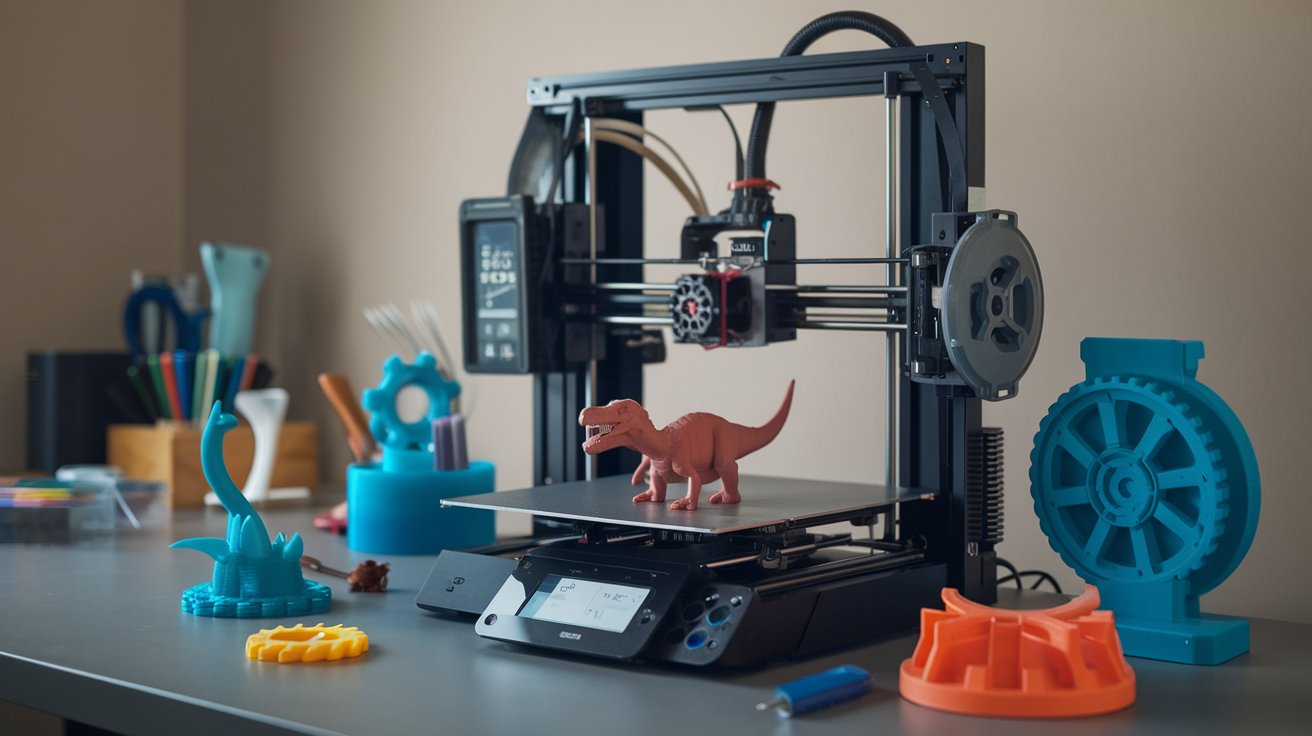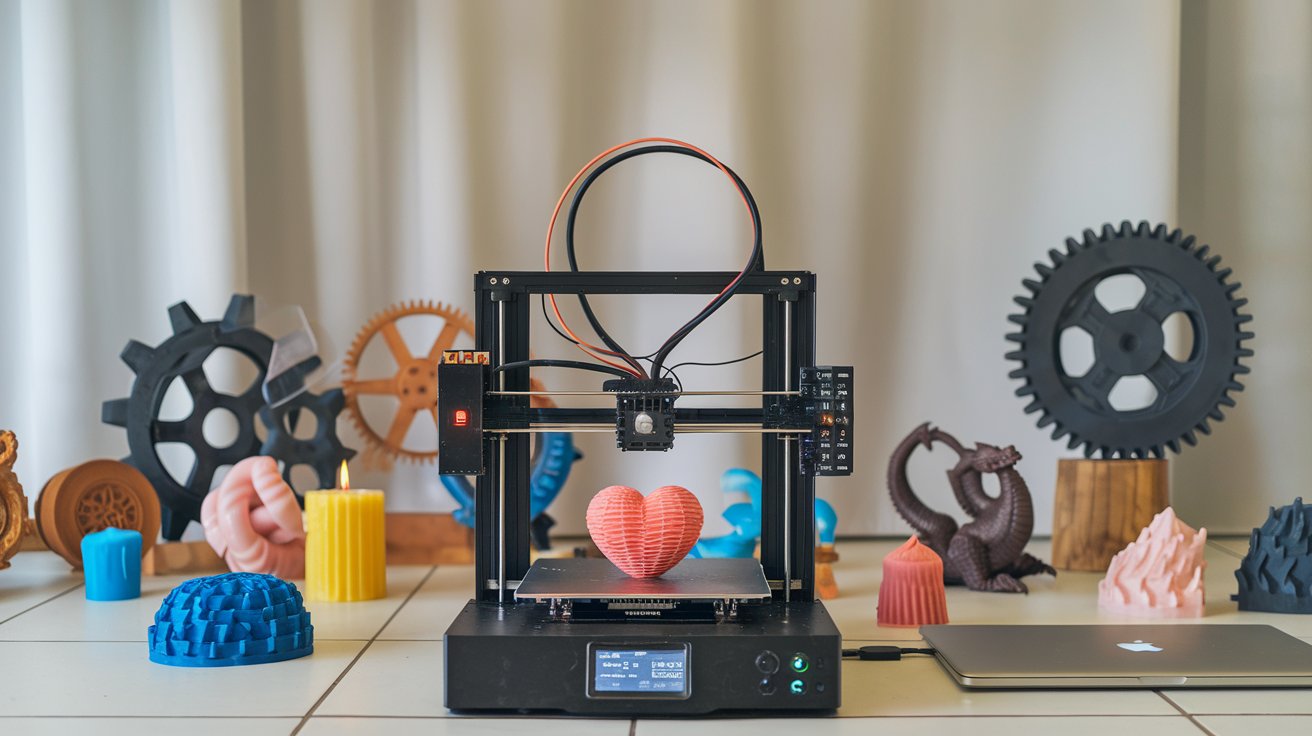
If you’re wondering what you can make with a 3D printer, the answer is almost anything you can imagine. In 2026, over 8.4 million households in the United States own a 3D printer, creating everything from custom phone cases to replacement parts, toys, home decor, and even items that generate income. Whether you’re a complete beginner or looking to monetize your printer, this comprehensive guide reveals 150+ practical ideas, money-making opportunities, and creative projects you can start printing today.
What Can You Actually Make With a 3D Printer in 2026
The capabilities of modern 3D printers have expanded dramatically, with consumer-grade machines now achieving 50-micron layer resolution and multi-material printing capabilities. You can create functional mechanical parts, artistic sculptures, medical aids, educational tools, and personalized gifts. The average American 3D printer owner produces between 15-30 objects monthly, ranging from simple organizational items to complex assemblies with moving parts.
Current 3D printing technology supports over 50 different materials including standard PLA and ABS plastics, flexible TPU, wood-infused filaments, carbon fiber composites, and even metal-filled materials. This versatility means you can print waterproof containers, heat-resistant kitchen tools, durable outdoor fixtures, and delicate jewelry pieces all from the same machine with appropriate material changes.
Useful Household Items You Can Print Right Now
The most popular category for 3D printing at home remains practical household items that solve everyday problems. Americans saved an estimated $340 million in 2025 by printing replacement parts and useful home accessories instead of purchasing new products.
Replacement Parts That Save Money
One of the most valuable applications is printing replacement parts for broken items. Common examples include refrigerator shelf brackets, washing machine knobs, vacuum cleaner attachments, cabinet hinges, drawer handles, blinds components, and appliance feet. The average replacement part costs $2-4 in filament versus $15-45 for manufacturer parts. Online repositories like Thingiverse and Printables host over 3.2 million free models specifically for replacement components.
You can print specialized parts for electronics including cable management clips, custom phone stands, laptop risers, monitor mounts, headphone holders, and keyboard wrist rests. These organizational items typically use 20-100 grams of filament, costing between $0.50-2.50 in materials while providing customization impossible with store-bought alternatives.
Kitchen Tools and Organizers
Food-safe PLA allows you to create custom kitchen items including measuring cup handles, spice rack organizers, utensil holders, pot lid organizers, sink caddies, and drawer dividers. While you shouldn’t print items that contact hot food or go in dishwashers, many organizational tools work perfectly. Cookie cutters remain the most popular kitchen print, with over 45,000 unique designs available in 2026.
Specialty kitchen gadgets you can print include bag clips, bottle openers, jar openers, funnel sets, egg separators, and custom measuring spoons for non-standard quantities. These practical items make excellent gifts and demonstrate immediate value to skeptics questioning whether 3D printing has real-world applications.
Home Organization Solutions
Create custom storage solutions perfectly sized for your spaces including wall-mounted key holders, desk organizers, drawer dividers, cable management systems, tool holders, pegboard accessories, and closet organizers. The ability to design items fitting exact dimensions saves space and creates professional-looking organization systems.
Bathroom and bedroom organizers include toothbrush holders, soap dishes, jewelry organizers, makeup brush holders, and modular drawer systems that snap together. Many designs incorporate magnets or mounting hardware, requiring simple assembly after printing for fully functional organizational systems.
What Can You Make With a 3D Printer to Sell
Entrepreneurial makers generated over $280 million in revenue through 3D printed products on platforms like Etsy, Amazon Handmade, and specialized marketplaces in 2025. Successful sellers focus on customizable items, niche products for specific hobbies, and practical solutions for common problems.
Top-Selling 3D Printed Products
The most profitable items include custom phone cases and accessories with profit margins of 300-500%, selling for $15-35 with material costs under $5. Personalized items like name tags, custom keychains, monogrammed gifts, and decorative letters consistently sell well because buyers pay premium prices for customization impossible with mass-produced items.
Miniatures for tabletop gaming represent a massive market, with custom gaming pieces selling for $8-25 each despite material costs under $2. Terrain pieces, dice towers, card holders, and storage solutions for board game enthusiasts create recurring customer relationships. Plant pots with drainage systems, self-watering features, and geometric designs sell particularly well, with successful sellers offering sets in coordinating styles.
Profitable Niche Markets
Pet accessories offer excellent opportunities with items like custom pet ID tags, food bowl stands, toy holders, and breed-specific accessories. The $136 billion US pet industry includes millions of owners willing to pay for personalized items. Cookie cutters for specific themes, holidays, or custom shapes sell year-round with seasonal spikes.
Organizers for specific hobbies create loyal customer bases including craft supply holders, fishing lure organizers, sewing notion storage, hobby paint racks, and tool-specific solutions. Marketing to passionate hobbyist communities through targeted social media groups generates consistent sales with minimal advertising costs.
Business Setup and Legal Considerations
Successful 3D printing businesses register as LLCs, obtain proper business licenses, and carry product liability insurance averaging $500-800 annually. You must respect intellectual property rights, never selling copyrighted characters or trademarked designs without licensing agreements. Creating original designs or using commercial-license models protects you legally.
Pricing strategies should account for material costs, electricity, printer wear, design time, and post-processing labor. Most successful sellers charge 4-6 times material cost for simple items, with custom or complex pieces commanding higher multiples. Building a brand identity with consistent quality, excellent customer service, and unique designs creates competitive advantages in crowded marketplaces.
What Can You Make With a 3D Printer for Beginners
New users should start with simple prints requiring minimal post-processing and forgiving tolerances. The first dozen prints teach crucial skills about bed adhesion, temperature settings, support structures, and layer orientation without risking expensive filament or extensive time investment on failed prints.
Beginner-friendly projects include simple organizers, phone stands, planters, coasters, bookmarks, and keychains. These items typically print in 1-4 hours, use 15-50 grams of filament, and don’t require supports or complex assembly. Success with basic projects builds confidence before attempting challenging prints with moving parts or precise tolerances.
Essential First Prints
Every beginner should print a benchy boat, the universal calibration model that reveals printer capabilities and settings accuracy. This 60-minute print tests overhangs, bridging, dimensional accuracy, and surface quality. Following up with calibration cubes, temperature towers, and retraction tests optimizes your specific printer and filament combination.
Practical first projects include desk organizers, cable clips, phone stands, and simple containers. These functional items provide immediate value while teaching fundamental concepts about layer adhesion, print orientation, and infill patterns. Most beginners complete 8-12 successful prints within their first week as they develop skills and confidence.
Learning Resources and Communities
Free model repositories including Thingiverse, Printables, and MyMiniFactory host millions of beginner-friendly designs with detailed instructions and print settings. YouTube channels dedicated to 3D printing offer troubleshooting guides, technique tutorials, and project walkthroughs specifically for newcomers.
Reddit communities like r/3Dprinting with over 2.1 million members provide troubleshooting help, design feedback, and project inspiration. Local makerspaces in 487 US cities offer hands-on learning, equipment access, and mentorship from experienced makers. Many libraries now provide free 3D printing services, allowing experimentation before purchasing equipment.
Creative and Fun Things to 3D Print
Beyond practical applications, creative projects showcase the artistic potential of 3D printing. Decorative items, toys, games, and artistic pieces let you explore design freedom while creating unique objects impossible through traditional manufacturing.
Toys and Games You Can Make
Print articulated action figures with moving joints, fidget toys with satisfying mechanical actions, puzzle boxes with hidden compartments, and marble mazes with customizable paths. Educational toys like alphabet letters, number sets, geography puzzles, and science models combine learning with play for children.
Board game enthusiasts print custom pieces, upgraded components, organizers for game storage, and entirely original games. Print-and-play game designs available online let you create complete games including dice, tokens, boards, and miniatures. The craftsmanship and customization possible with 3D printing creates one-of-a-kind gaming experiences.
Decorative Items and Art
Create geometric vases, lithophanes that reveal images when backlit, decorative wall art, sculptural pieces, and architectural models. Multi-color prints using filament swaps or multi-material printers produce stunning visual effects. Seasonal decorations for holidays cost pennies in materials while providing customized home decor.
Functional art pieces combine aesthetics with utility including designer lamps, decorative bowls, artistic planters, and sculptural bookends. Many artists sell limited edition numbered prints of their designs, creating collectible items that appreciate in value while establishing their reputation in the maker community.
Projects for Kids and Education
Educational applications include printing anatomy models, molecular structures, historical artifacts, geography maps, and mathematical concepts made tangible. Teachers increasingly incorporate 3D printing into STEM curricula, with students designing and printing solutions to real-world problems.
Kids enjoy printing toys they design themselves, custom LEGO-compatible pieces, action figure accessories, and personalized items like name tags or door signs. The design process teaches spatial reasoning, problem-solving, and digital literacy while creating excitement about technology and engineering careers.
Advanced 3D Printing Projects
Experienced users tackle complex assemblies with moving parts, functional mechanisms, and precise tolerances requiring advanced skills. These projects demonstrate the full potential of consumer 3D printing while challenging your abilities and expanding your knowledge.
Print working clocks with gear trains, mechanical calculators, functional locks with keys, articulated robot arms, and precise measurement tools. Engineering hobbyists create custom drones, RC car components, camera accessories, and specialized tools for specific tasks. These complex projects may require 20-50 hours of printing plus extensive assembly and calibration.
Functional Mechanical Devices
Create gear systems with properly meshing teeth, bearing assemblies, linear motion systems, and compound mechanisms. Print functional tools including wrenches sized for unusual fasteners, specialized jigs for repetitive tasks, and custom fixtures for workshop projects. Many makers design and print tools that would cost hundreds of dollars commercially.
Print working engines as educational demonstrations, planetary gearboxes with multiple reduction stages, differential mechanisms, and transmission systems. While these rarely serve practical purposes beyond education and entertainment, they showcase precision capabilities and teach valuable lessons about mechanical design and tolerances.
Electronics Enclosures and Robotics
Design custom housings for Arduino projects, Raspberry Pi cases with specific port access, sensor mounts, and protective enclosures for electronics. The ability to create perfectly fitted cases with mounting points, ventilation, and cable routing enables clean professional-looking projects impossible with generic enclosures.
Robotics applications include printing structural frames, custom motor mounts, gear trains, wheels, grippers, and sensor housings. Educational robotics competitions increasingly feature custom 3D printed components, with teams designing specialized parts that provide competitive advantages. Home automation enthusiasts print custom sensor enclosures and mounting brackets integrated into their decor.
What Are You Not Allowed to 3D Print
Legal restrictions and safety concerns limit certain 3D printing applications. Understanding prohibited items protects you from legal consequences and prevents dangerous situations. Federal and state laws regulate specific categories with serious penalties for violations.
Firearms and weapons components face strict federal regulation under the National Firearms Act and Gun Control Act. While technically possible to print firearm parts, doing so without proper licensing violates federal law with penalties including 10 years imprisonment and $250,000 fines. State laws vary significantly, with some states specifically prohibiting manufacture of untraceable firearms.
Intellectual Property Restrictions
Never print copyrighted characters, trademarked logos, or patented designs without authorization. Major entertainment companies actively pursue legal action against sellers of unauthorized merchandise, with settlements often exceeding $150,000. Even printing for personal use technically violates copyright, though enforcement focuses on commercial activity.
Counterfeit products including fake designer items, fraudulent safety equipment, and knockoff branded goods violate trademark laws with civil and criminal penalties. Customs officials can seize counterfeit items, and rights holders may pursue damages. Creating original designs inspired by commercial products generally remains legal if you don’t copy protected elements.
Safety and Regulatory Concerns
Avoid printing items where failure causes injury including safety equipment like climbing gear, protective equipment, automotive safety parts, or medical devices without proper certification. Consumer Product Safety Commission regulations prohibit selling certain items without compliance testing, particularly children’s toys and products.
Counterfeit currency, government seals, and official identification documents carry severe federal penalties. Even possessing files for printing currency constitutes a crime. Lock picking tools and burglary implements may violate state laws depending on intent and circumstances. Research local regulations before printing items in legally gray areas.
Is It Worth Having a 3D Printer at Home
The value proposition depends on your interests, skills, and intended applications. Entry-level printers cost $200-400 in 2026, with quality models from Creality, Elegoo, and Anycubic offering reliable performance. Operating costs average $15-30 monthly for casual users including filament, electricity, and occasional maintenance.
Most owners recoup their investment within 6-18 months through printed replacement parts, custom items, gifts, and potentially selling creations. The average household saves $380 annually by printing items instead of purchasing, with hobbyists and makers saving significantly more. Beyond financial calculations, creative satisfaction, learning opportunities, and problem-solving capabilities provide intangible value many users find priceless.
Cost Analysis and Break-Even Timeline
Calculate initial investment including printer ($200-400), startup filament ($30-50), basic tools ($20-40), and optional upgrades ($50-100). Monthly costs include filament averaging $20 for casual use, electricity around $3-5, and maintenance supplies $2-5. Heavy users may spend $50-80 monthly on materials for extensive printing.
Break-even analysis shows typical scenarios where printing replacement parts saves $30-50 monthly, custom gift creation eliminates $40-60 in purchases, and organizational items replace $20-40 in store-bought solutions. Selling items accelerates payback, with successful side businesses recovering equipment costs within 2-4 months through profits.
Learning Curve and Time Investment
Expect 10-20 hours learning basic operation, calibration, and troubleshooting during your first month. Most users achieve consistent successful prints within 15-25 attempts as they master their specific machine. Online communities dramatically shorten learning curves through shared knowledge and troubleshooting help.
Ongoing time investment varies widely based on ambitions and applications. Printing replacement parts as needs arise requires minimal time, while pursuing design and creation as a hobby or business demands substantial commitment. Many users find the learning process enjoyable, viewing challenges as puzzles to solve rather than frustrating obstacles.
Where to Find Free 3D Printing Files
Millions of free models eliminate the need for design skills, letting you immediately print useful items, toys, decorations, and tools. Understanding where to find quality files and how to evaluate designs saves time and filament on failed prints.
Thingiverse hosts over 3.2 million free designs across every category imaginable, with community ratings and remix culture encouraging improvements. Printables by Prusa Research features curated collections, design contests, and a reward system for creators. MyMiniFactory emphasizes quality through testing all featured models, ensuring successful prints for users.
Best Model Repositories
Cults3D offers both free and premium models with sophisticated search filters and designer storefronts. Thangs combines model hosting with a powerful 3D search engine finding similar designs across multiple platforms. YouMagine focuses on functional prints and engineering applications with detailed documentation.
Specialized repositories serve specific niches including Yeggi for search aggregation across multiple sites, Pinshape for creative designs, and GrabCAD for professional engineering models. Many manufacturers provide official replacement part models, and museum institutions increasingly release artifact scans for educational printing.
Evaluating Model Quality
Check download counts, user ratings, and comments before committing to long prints. Well-documented models include recommended print settings, support requirements, assembly instructions, and photos of successful prints. Files with thousands of downloads and positive feedback rarely cause problems.
Preview models using free software like PrusaSlicer or Cura before printing, identifying potential issues including thin walls, unsupported overhangs, or dimensional problems. The slice preview reveals actual print paths, layer times, and material usage, preventing surprises after starting prints. Experienced users learn to recognize quality models at a glance.
Custom Design and Modification
Creating original designs or modifying existing models unlocks the full potential of 3D printing technology. Free software including Tinkercad, Fusion 360 for hobbyists, and Blender for artistic work enable anyone to learn 3D modeling through online tutorials and practice.
Start with simple modifications to existing designs, adjusting dimensions, adding personalization, or combining elements from multiple models. Parametric design using Fusion 360 allows easy modification of key dimensions, creating custom-fitted items for specific applications. Online courses, YouTube tutorials, and community forums teach design skills from beginner to advanced levels.
Beginner-Friendly Design Software
Tinkercad offers browser-based 3D modeling with intuitive controls perfect for beginners and educational settings. Create functional designs within hours using primitive shapes and boolean operations. The platform includes built-in lesson plans and project galleries inspiring new creations.
Fusion 360 provides free licenses for hobbyists with professional-grade capabilities including parametric modeling, assemblies, and simulation. The learning curve is steeper but skills transfer to professional applications. Extensive YouTube tutorials from channels like Lars Christensen and Product Design Online teach systematic approaches to part design.
Advanced Design Techniques
Master parametric modeling to create adjustable designs that automatically update when you change key dimensions. Learn proper modeling for manufacturing including wall thickness requirements, draft angles, tolerance considerations, and print orientation optimization. These techniques separate amateur designs from professional-quality models.
Generative design uses AI to create optimized structures meeting strength requirements with minimal material. Topology optimization reduces weight while maintaining structural integrity, creating organic shapes impossible through traditional design. Advanced users incorporate threaded inserts, snap-fit joints, and living hinges into designs for sophisticated assemblies.
Related video about what can you make with a 3d printer
This video complements the article information with a practical visual demonstration.
Your questions answered
What can you actually make with a 3D printer that is useful?
You can make highly useful items including replacement parts for broken appliances, custom organizational systems, phone stands, cable management clips, kitchen tools, and household fixtures. The most practical applications involve creating items customized to your exact needs or printing replacement parts that would cost 5-10 times more to purchase. In 2026, the average American 3D printer owner saves $380 annually by printing useful household items, repair parts, and custom solutions for specific problems.
Can you make money with a 3D printer at home?
Yes, many people generate income through 3D printing by selling custom items on platforms like Etsy, Amazon Handmade, and specialized marketplaces. The most profitable products include personalized items like custom phone cases, keychains, and nameplates; miniatures for gaming; pet accessories; and organizational solutions for specific hobbies. Successful sellers typically earn $500-3,000 monthly by focusing on niche markets, offering customization, and building a brand reputation. The key is finding underserved markets and providing unique value that mass production cannot replicate.
Is a 3D printer worth it for beginners in 2026?
A 3D printer is worth it for beginners if you enjoy creating things, solving problems, or customizing your environment. Entry-level printers cost $200-400 and require 10-20 hours to learn basic operation. Most beginners achieve consistent success within their first month. The value comes from printing replacement parts, creating custom gifts, organizing your space with perfectly-sized solutions, and exploring creative projects. Beyond financial savings averaging $380 annually, beginners find significant value in learning new skills, joining maker communities, and experiencing the satisfaction of creating functional objects.
What are you legally not allowed to 3D print?
You cannot legally print firearms or weapons without proper federal licensing, with violations carrying up to 10 years imprisonment and $250,000 fines. Copyrighted characters, trademarked logos, and patented designs cannot be printed without authorization, especially for commercial purposes. Counterfeit currency, government seals, official identification documents, and safety equipment requiring certification are prohibited. Additionally, printing counterfeit branded products violates trademark laws with serious civil and criminal penalties. Always respect intellectual property rights and avoid items where failure could cause injury or violate consumer safety regulations.
Where can I find free 3D printing files?
The best sources for free 3D printing files include Thingiverse with 3.2 million models, Printables by Prusa Research with curated collections, and MyMiniFactory featuring tested designs. Additional repositories include Cults3D for both free and premium models, Thangs with powerful search capabilities, and YouMagine for functional prints. Many manufacturers provide official replacement part files, and museums release artifact scans for educational purposes. When selecting files, prioritize models with high download counts, positive ratings, detailed instructions, and photos of successful prints to ensure quality results.
How much does it cost to operate a 3D printer at home?
Operating a 3D printer at home costs approximately $15-30 monthly for casual users, including filament averaging $20 per kilogram, electricity around $3-5 monthly, and occasional maintenance supplies costing $2-5. Heavy users printing frequently may spend $50-80 monthly on materials. Individual print costs range from $0.50-5.00 for typical household items depending on size and complexity. Most owners find that printing replacement parts and custom items saves more money than the operating costs, with average households recovering expenses within 6-18 months through avoided purchases and potential income from selling printed items.
| Category | What You Can Make | Key Benefits |
|---|---|---|
| Household Items | Replacement parts, organizers, kitchen tools, cable clips, custom fixtures | Save $380 annually, perfect fit for spaces, immediate solutions |
| Money-Making Products | Custom phone cases, gaming miniatures, pet accessories, personalized gifts | 300-500% profit margins, $500-3,000 monthly potential income |
| Beginner Projects | Phone stands, planters, organizers, keychains, simple containers | 1-4 hour prints, builds skills, immediate functionality |
| Creative Items | Toys, games, art, decorations, educational models, custom designs | Unlimited customization, unique one-of-a-kind pieces, personal expression |
| Advanced Projects | Mechanical devices, robotics, electronics enclosures, functional tools | Professional capabilities, complex assemblies, specialized solutions |
| Cost Considerations | $200-400 printer, $15-30 monthly operating costs, 6-18 month payback | Affordable entry, ongoing savings exceed costs, creative satisfaction |